Current Projects
Building Relationships with Land
Faculty Sponsor : Dr. Megan Franke ( mfranke@ucla.edu)
PI Christine Lee PhD
Graduate School of Education and Information Studies
Participants: Primary students
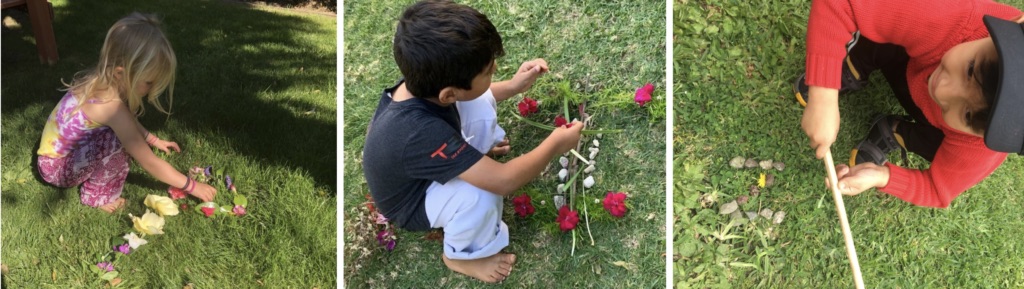
This academic year, Intermediate teachers are implementing a multidisciplinary curriculum on the history and importance of land. Therefore, Dr. Megan Franke (PI) and Dr. Christine Lee (Co-PI) are collaborating with Intermediate teachers from Rooms 1 & 2 to examine how students’ understanding of land changes over the academic year. Our data collection will include copies of students’ gardening journals that teachers are using to continuously document and reflect on the importance of land, classroom conversations of students sharing what they wrote in gardening journals, and photographs of students planting and taking care of campus plants. These data sources will be analyzed to track the changing understandings of how students define land, how important it is to have relationships with the land, and the importance of taking action in ways that sustainably support land. Participation in this study is voluntary and will remain confidential. Any questions about the project can be directed to Dr. Christine Lee at clee@labschool.ucla.edu or Dr. Megan Franke at mfranke@ucla.edu.
The Impact of Play on Students’ Learning and Engagement
Faculty Sponsor : Dr. Megan Franke ( mfranke@ucla.edu)
PI Christine Lee PhD
Graduate School of Education and Information Studies
Participants: Primary students
Classrooms 9 & 10
Focus: Primary teachers and Dr. Lee co-designed a play-based science and math unit on interdependent relationships in the marine ecosystem. Students chose marine roles and created costumes to depict underwater inhabitants such as plankton, kelp, whales, sea urchins, and sea otters, and learned about their roles within an underwater kelp forest. The students then played as their chosen role in the deep underwater kelp forest to better understand their contribution to a balanced ecosystem.
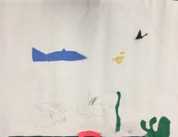
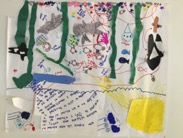
Findings: Pre and posttests showed significant learning in students’ level of understanding of the interdependent nature of marine species needed for a thriving ecosystem. Students displayed learning of spatial relations skills as they used size and dimension to represent the kelp forest ecosystem depicted in drawings below. The students grew passionate about preventing humans from disrupting marine life, so they used art to create a sculpture of the kelp forest using plastic waste and created informational pamphlets to share with their school community.
Using Pedagogical Documentation to Enhance Inquiry-based Teaching and Learning
Teachers from EC through Upper levels partnered with postdoctoral scholar, Nicole Mancevice, for a multi-year teacher action research project.
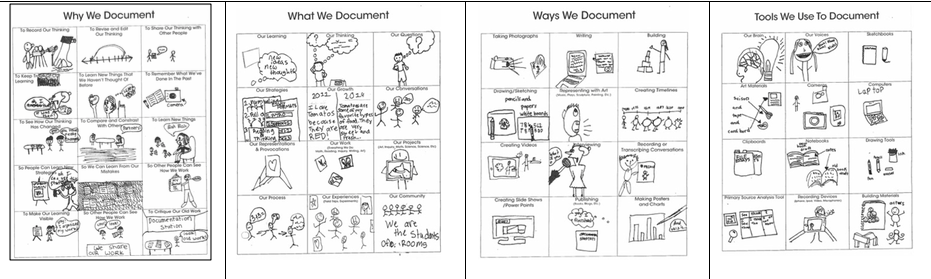
Focus: “How did you solve the problem?” “Why did you use that strategy?” “What are my next steps based on what I learned today?” From EC through Upper levels, students are asking their peers questions about the process of learning, and they’re reflecting on their own learning process. Both students and teachers are documenting the students’ thinking in writing, sketches, and recordings. Teachers initiated an action research project to study the role of pedagogical documentation on student reflection and teacher decision-making as part of inquiry instruction in an elementary school setting.
Findings: Teacher and students improved on their abilities to reflect on the process of learning during inquiry. Results led to revising school “best practices” guide to address alignment between documentation and formative and summative assessment practices
Storytelling and Writing in Kindergarten STEAM Curriculum
This year, Dr. Megan Franke (PI) and Dr. Christine Lee (Co-Investigator) will collaborate with Early Childhood teachers Kelly Peters, Eric Varela, and Arlen Vidal-Castro to research how UCLA Lab School Kindergarten students develop language, storytelling, and writing skills. As Kindergarten students are still developing how to decode and comprehend text, it is also important to continuously cultivate narrative and creative storytelling skills. Our research aims to explore how we can support students’ skills and identities as dynamic storytellers through wordless picture books. The research will include: video recordings of classroom activities on storytelling and photographs of students’ written stories. Any questions about the project can be directed to Dr. Megan Franke at mfranke@ucla.edu or Dr. Christine Lee at clee@labschool.ucla.edu.
Understanding how children see complex event types
Ekaterina A. Khlystova, Principal Investigator (ekhlystova@g.ucla.edu) Dr. Laurel Perkins, Faculty Sponsor (perkinsl@ucla.edu)
This winter quarter, Ekaterina Khlystova, a Ph.D. student from the Department of Linguistics, will conduct a study with Early Childhood I students (3-5 years) that examines how young children perceive complex events like trades. This study looks at how children of this age see different events in the world around them, as they are learning words that describe those events. In order to determine how children match new verbs to events they see in the world, we need to know whether they see those events in the same way as adults do. We will interview children ages 3-5 (Early Childhood I Classroom) for 15-30 minutes. This study consists of a single session in which the child is introduced to a “very picky” puppet. The child will then watch pairs of silent videos, with one video showing a girl and a boy playing with some toys and another with a small change to the video. By asking your child to help the puppet sort the pairs into ones that “match” and ones that don’t, we can see whether changes to some parts of the event (for instance, how the toy moves, what the toy is, who is moving the toy) are more or less noticeable than other changes. We will video record the sessions. Our hope is to examine how children perceive complex social interactions like “trading”, especially as it relates to early verb learning. Participation in this study is voluntary and will remain confidential. If you have any questions, or wish to opt out of this study, please contact the principal investigator, Ekaterina Khlystova, at ekhlystova@g.ucla.edu.
Proposed Study of Children’s Land Approach Implementation
This year, Drs. Nicole Mancevice (Principal Investigator) and Lab School’s Vice Principal Renata Gusmão-Garcia Williams will collaborate to study UCLA Lab School’s implementation of Children’s Land in Early Childhood classrooms. Children’s Land is a nature-based curriculum approach that the school plans to implement during the 2023-2024 academic year. Given that this is the school’s first year implementing Children’s Land, the research will focus on documenting and mapping how the approach is incorporated within the school context and curricula as well as initial reflections related to program outcomes. The research will include: teacher interviews; classroom observations, photographs, and audio recordings; and collecting planning and classroom documents regarding the Children’s Land approach implementation. Any questions about the project can be directed to Dr. Nicole Mancevice at nmancevice@labschool.ucla.edu.
The Impact of Math Circle Curriculum on Student Learning: A Pilot Study
For the 2023-2024 school year, Dr. Glezier from the Department of Mathematics will be offering the UCLA Olga Radko Endowed Math Circle (ORMC) curriculum to Grades 3-6 students at the Lab School as an afterschool enrichment program as part of a research project. The math curriculum intervention consists of three 8-week sessions hosted at the Lab School for the 2023-2024 school year.
The main goal of the research project is to see how the ORMC intervention impacts elementary school students’ math achievement. All students in intermediate and upper classes will take two math tests as pre-tests and the post-tests, not related to the ORMC curriculum, to evaluate the effect of the intervention. The students in the research intervention (math circles classes) will also be asked to complete a short survey at the end of each 8-week session. Those students whose parents sign them up for the Math Circles enrichment classes will be chosen to participate through a random sample and the study will include 50 students: 25 intermediate and 25 upper students. Dr. Wang will be conducting the research study of the math intervention. The research project begins the week of Sept 25 and will conitnue through May 30, 2024.
Moments that Matter: A Qualitative Study to Understand How Young Children Make Sense of Reading Instruction
Dr. Nicole Mancevice PI, This study explored what young children think about reading instruction. The goal was to understand how students make sense of the multiple literacy learning contexts that they engage in throughout the day. What activities, materials, and features of the classroom learning environment are important to them? The methods of data collection will include classroom observation, teacher interviews, and photo-based student interviews. The photo-based interview protocol builds on the school’s pedagogical documentation routines and provides an authentic opportunity for students to share and reflect on their experiences of learning to read.
Environmental Qualities of Elementary Classrooms-
Dr. Megan Franke PI, This research study examined how the school’s architectural designs, rooted in Richard Neutra and Principal Seed’s vision, have impacted the environmental quality of the school’s classrooms. Six classrooms were involved where measurements had been recorded using sensors for elements like light, temperature, air quality and surveys are used to get student & teacher inputs. Students have been very interactive with researchers in asking questions, and the intermediate students in one class had a zoom call with the director of sustainability from Eastman Perkins (study co-sponsor) to talk about the measurements and impacts of the study
Critical Algorithmic Literacy: Bridging Computer Science and Critical Media Literacy in the Elementary Classroom-
Critical Algorithmic Literacy: Bridging Computer Science and Critical Media Literacy in the Elementary Classroom– Scott Moss, UCLA PI-(ELP doctoral candidate) Co-developed CAL curriculum with Lab School teacher Christina Cubelos for all DL Intermediate students to gain insights from what can be learned by incorporating Critical Algorithmic Literacy in core curricula. Students learned about how bias can be presented by websites/social media and how it is coded into the algorithmic tracking of individuals to increasingly deepen that bias over 6 weeks of lessons. (Data still being analyzed) The curricula was well received and the researcher went back and volunteered to offer more insights and tools to help students gain a deeper understanding after data collection ended.
UCSF Multitudes Dyslexia study
This is a joint study between UCSF researchers and UCLA to contribute to a large statewide study seeking to test methods for better screening of Early Childhood literacy challenges. The group followed ECII students from 2020-21 school year into Primary II in 2022-23 school year as they continue to refine measurements. There were three separate timepoints in 2022-23 that students were assessed. This is a state-wide study and UCLA’s Dr. Wolf is working in an advisory role for the project so there are synergies and insights across the two early childhood literacy projects at Lab with the goal of better identifying dyslexia sooner in younger students.
Early Childhood Literacy Project - OSEP Grant Study
Leading UCLA researchers in collaboration with Lab School faculty are working to co-design a series of reading interventions for ECII and Primary students as part of regular practice to support young students’ early literacy. This research study will seek to determine the impacts of those interventions on students’ reading. The Lab School regularly uses assessments to help identify and support students who are at-risk of reading challenges and/or dyslexia in early grades in order to prevent them from falling behind in reading. As a result, students receive targeted interventions to support their development. This research project will be using data from these classroom practices to assess the impacts of various interventions on students. As part of their project, researchers will ask parents of students participating in various interventions to voluntarily complete a short questionnaire on their child’s background and reading habits. Also included would be a voluntary short survey on the level of parent satisfaction with the program at the end of each year their child participates in it. None of the data, analyses, or reports from the study will contain any identifiable information about any child. As parents have already signed the UCLA Lab School blanket consent form, they are not required to sign any additional forms at this time. This study was developed by a postdoctoral researcher and a professor in the UCLA Education Department. Parents are welcome to contact Dr. Laura Rhinehart (laura.rhinehart@ucla.edu) or Dr. Maryanne Wolf (maryanne@maryannewolf.com) with any questions
Energy Conservation
In collaboration with Lab School teaching staff, researcher Magali Delmas, Professor at the UCLA Institute of the Environment and Sustainability and Anderson School of Management and her team will be conducting a CONNECT research project called the the “Dial Down Challenge.” It is designed as a 5-week project where Upper I and Upper II students and their families learn about energy efficiency and work together to implement simple and no-cost changes to lower their utility bills. In addition to classroom discussions and check ins, students and their families will be working collaboratively at home around energy saving strategies which will include one self-guided activity per week. Every week focuses on a different aspect of energy consumption, so families can explore, learn and collaborate in fun activities around the house. All materials will be sent via email.
The contents of the research study will be part of planned classroom activities, however, because data collection includes energy saving information from home, a separate consent form needs to be completed to participate. If you have any questions, comments, or concerns about the research, please visit the website at DialDown.org or contact the principal investigator, Dr. Magali Delmas Principal Investigator (delmas@ioes.ucla.edu) or Dr. Gursel Aliyev (galiyev@ucla.edu).
Perception and production of lexical stress in Spanish-English bilingual children
Faculty Sponsor Ji Young Kim PhD (youngkim@ucla.edu)
PI Gemma Repiso PhD candidate (grepisopu@ucla.edu)
School of Spanish and Portuguese
Participants: Primary, Intermediate, Upper 1 & Upper II
classrooms 4, 5, 6, 7, 8, 9, 10, 13, 14 15 16 & 17
Keywords: language learning; literacy development
Phonological Awareness constitutes a strong predictor of literacy development. Recent research suggests that awarenessof stress and intonation also plays an important role in predicting reading abilities. This project at the Lab School will investigate the phonological development of Spanish speakers when enrolled in a Dual Language Program. The importance of dual language programs has been recognized, and this research has a goal to further investigate the effect of formal instruction in the production of Spanish sounds. The project has two main objectives from a data collection standpoint: 1) to explore the relationship between sensitivity to lexical stress (knowing where to put the syllable accent) and reading abilities and 2) to understand how lexical stress is produced and what inputs contribute to the perception lexical stress ( e.g. pitch, duration, intensity). This will then be studied to determine the importance of formal Spanish language instruction for native speakers, and how best to develop the curriculum that would bridge the language differences between English and Spanish for this population of students. This would have implications for these students as they advanced their educations. Spanish speaker students in the Lab School will be asked to participate in two short research sessions (30 minutes each) during the spring quarter. In the first session, they will be asked to learn the names of some imaginary characters and to listen to auditory stimuli to identify them. Later, they will read a list of 40 words in Spanish. In the second session, they will be asked to produce the name of the imaginary characters using picture stimuli. In the second session they will also be asked to tell a story in Spanish.
2019 Developing Robots to be Companion Learning Tool for Early Literacy and Language Learning
Professors Alison Bailey, PhD (310-825-1731 or abailey@gseis.ucla.edu).
Dr. Abeer Alwan PhD. (310) 206-2231 or alwan@ucla.edu)
Graduate School of Education & Information Studies researchers in Education in collaboration with Engineering
Participants: ECI ECII classrooms 13, 14, 15, 16, 17
Keywords: Computer-Supported early literacy, language learning
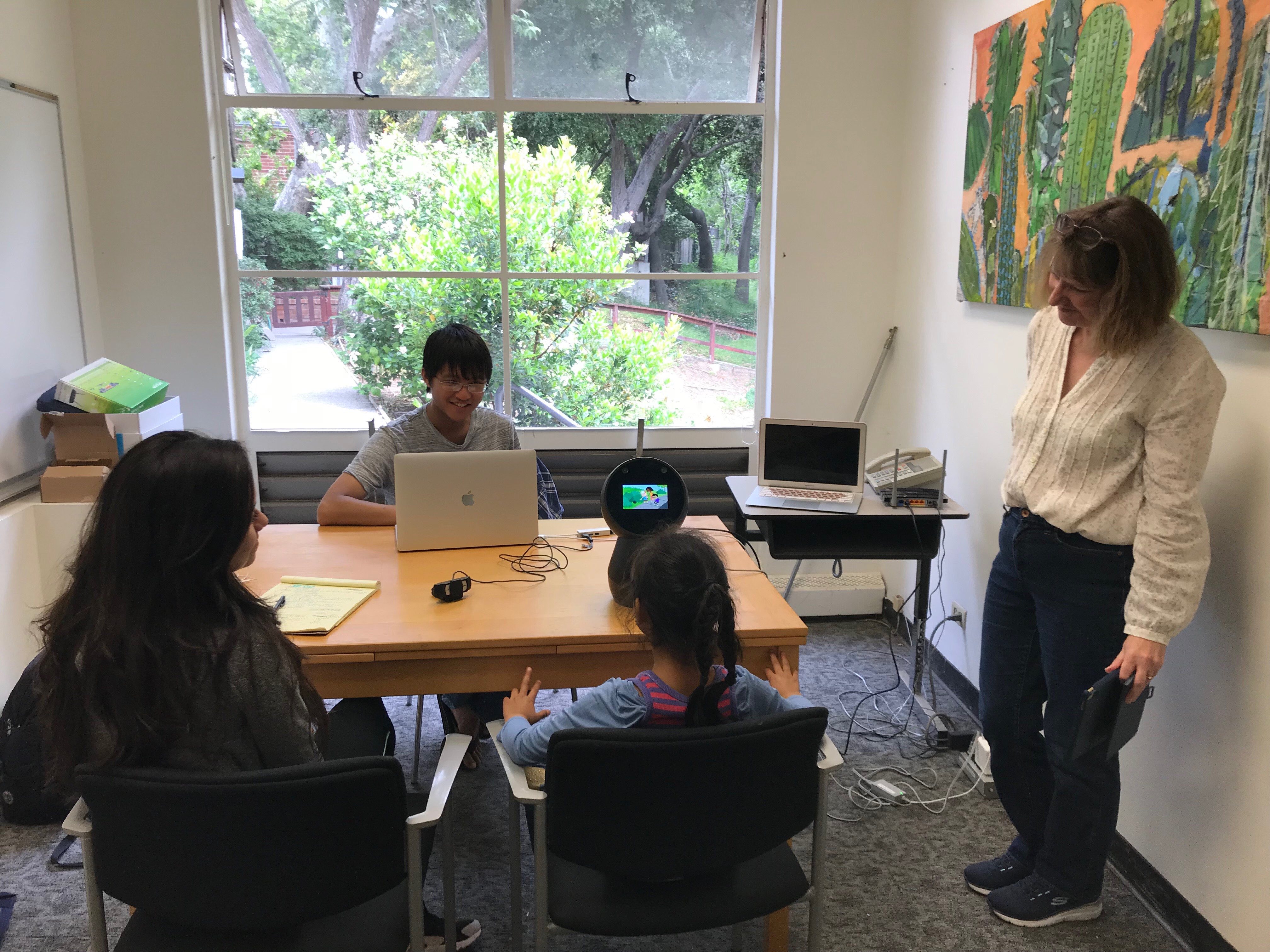
Dr. Alison Bailey and her team from GSEIS doing a longitudinal study following students from EC to Upper Levels.
Focus: A research and development initiative on the design and implementation of social robots for the teaching of reading and literacy skills for young children. Such robots are programmed to understand child input, provide evaluation information to teachers on their reading and literacy levels, and adapt response questions and teaching approaches to promote steady learning and improvement.
Findings: This new National Science Foundation-funded project aims to improve the ability for machines like Jibo to understand the speech of children so that they can inform educational applications in the crucial areas of oral language and early literacy instruction.
Teacher Action Research- Documenting Teaching and Learning: A Teacher Action Research Project to Elevate Thinking and Learning in the Inquiry Process
Principal Investigator: Chris Wilson, Sylvia Gentile, Judith Cantor
UCLA Lab School teachers
PI Email: cwilson@labschool.ucla.edu
sgentile@labschool.ucla.edu
jkantor@labschool.ucla.edu
Keywords: Inquiry, documentation, reflection
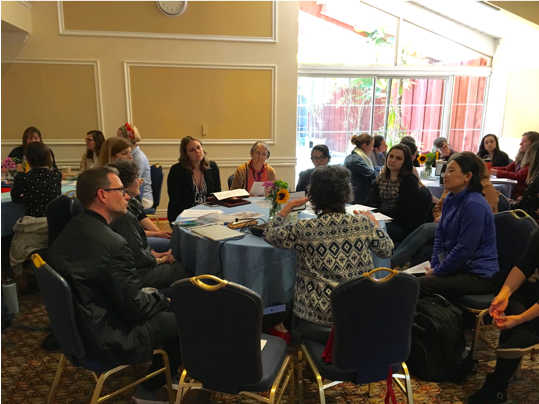 This year, the Inquiry Pedagogy Vision Committee is focusing on the role of documentation to support teacher planning and enrich student learning, specifically in the area of science and social studies. We are investigating how documentation enhances the inquiry process at UCLA Lab School. Often documentation is used at the end of the learning process to make learning visible. We believe documentation should be an interactive tool throughout the process that provides opportunities for students and teachers to reflect on and refine their work. Documentation should not be limited to the final student product. Our goal is to elevate the role of reflection by teachers and students and investigate the impact of using documentation in this interactive way.
The action research project will help us to identify ways documentation impacts teachers’ and students’ thinking about the content, the product, and the process of inquiry. We will analyze data from student work and documentation to look for shifts in student thinking, evidence of understanding of science and social studies concepts, and patterns of group interactions. We will analyze data from teacher work and documentation to understand how teacher moves relate to student participation and learning, as well as to identify best practices for documentation. This project will be partially supported by a grant from the Cotsen Foundation for the Art of Teaching and support from the CONNECT office. The project goals are two-fold: to increase the types and use of documentation throughout the inquiry process, and to evaluate how these changes affect teacher planning and students’ thinking and understanding of science and social studies concepts. We hope the project findings will encourage more teachers and students to use documentation.
Teacher Action Research-Examining Safe School Culture at an Elementary School
Principal Investigator:
Shanna Cohen
UCLA Lab School , teacher, Safe School Specialist
Participants:
Keywords: Computer-Supported early literacy, language learning
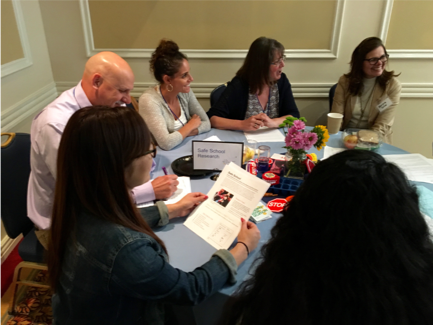 This teacher action research project is bringing new research focus to the lab school faculty’s understanding of the Safe School system. For the past 15 years, Safe School has served as the foundational system for social-emotional growth at the lab school by providing children and adults with the tools and language for self-awareness and conflict resolution. In the past, Safe School personnel have held trainings for all new employees but there was no consistent, ongoing training for hired faculty and staff. Now, however, we are offering annual training for all employees in order to keep Safe School values and language at the forefront of our practice.
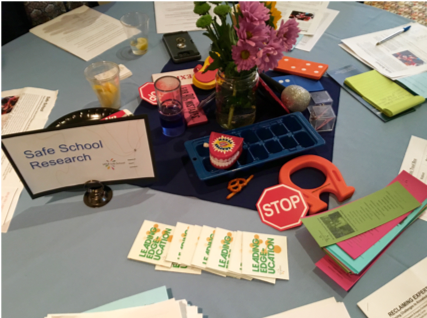 Last school year, the Safe School Vision Committee sponsored a multi-year research project led by Shanna Cohen, working with committee members, Safe School Specialist Laurie Ramirez, and GSEIS PhD candidate Christine Lee. The goal for the multi-year research project is to determine how well the Safe School system is integrated throughout the school. Last year a school-wide teacher and TA survey was used to identify areas on which to focus future training. This year, using the results of the survey a new training for teachers and staff was implemented in October. One teacher new to the lab school stated, “I learned more in this four-hour training than I did in all my teacher education programs”. Ongoing data collection by researchers includes student interviews post-conflict, analysis of conflict mediation practices and collection of surveys to determine how Safe School practices are being integrated into our classroom culture.
Science Through Technology Enhanced Play
Professor Noel Enyedy, Ph.D.
Graduate School of Education & Information Studies
enyedy@ucla.edu
Participants: Primary classrooms 3. 11, 12, 9 &10
Key Words: Modeling, Science Education, Augmented Reality
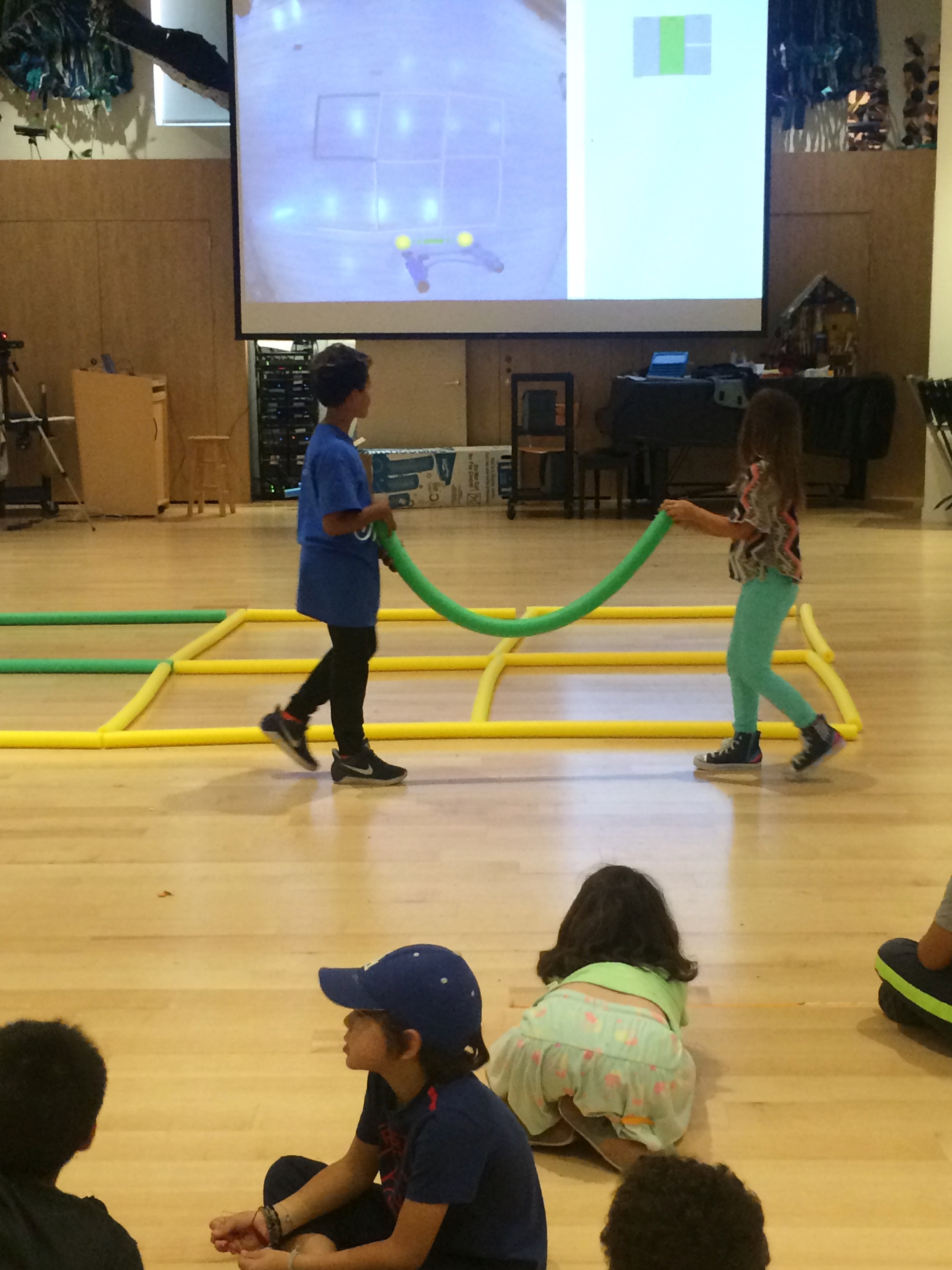 This project has developed two science units–states of matter and pollination–that employ commercially available sensing equipment to support early elementary science classrooms to use play to model and simulate science concepts. The National Science Foundation, has awarded the team two follow up grants to add additional features such as the integration of iPads and more interactivity. The research findings of this study will inform the field about the ways in which young students can engage in authentic scientific modeling, and the ways that technological tools can enhance this process. Furthermore, the research findings will demonstrate how students’ play activities can be leveraged to support academic learning activities in developmentally appropriate ways. The STEP project aims to use new sensing technologies to help transform young children’s physical actions during pretend play into a set of symbolic representations and parameters in a science simulation. As students physically move around the classroom,the computer will track their motion and interactions with selected objects and translate their physical activity into a shared display. Imagine something like an educational version of the Kinect game console where instead of just playing games, the students are engaging in scientific inquiry and modeling. Through these playasmodeling activities, students will learn the core concepts of science, and theconceptual skills of modeling and systematic measurement. In addition to the motion tracking technology, the researchers are also using Apple watches and iPads for participants to interact with. STEP will implement this new type of learning environment in five experimental classrooms at UCLA Lab School Students in all classrooms will participate in pre and post test interviews on the science concepts.
Investigating the characteristics and efficacy of the Learning in Two Languages Program: A Research and development initiative
Professor Alison Bailey, Ph.D.
Graduate School of Education & Information Studies
abailey@gseis.ucla.edu
Participants: Intermediate classrooms
Keywords: Dual Language Education, Linguistic Development
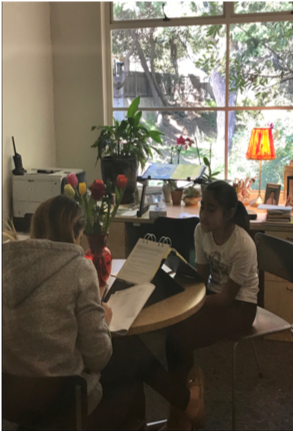 Teachers in the Learning in Two Languages (LTL) Program at the UCLA Lab School in conjunction with UCLA researchers have conducted a fully comprehensive research and development initiative on the LTL program to describe, evaluate and improve the program over the past 4 years. The project to critically examine the linguistic, academic, cognitive, social and cultural factors that the program hopes to foster in students. Teacher and student classroom interactions were regularly observed, and students’ language and academic skills, as well as their social and cognitive perspectives were regularly measured using assessments, observations and interviews. Other stakeholders in the program were formatively surveyed for their perspectives on the LTL program (including program teachers, other Lab School teachers and staff, parents of program children and parents with children throughout the school).
The Role of Animacy in the Acquisition of Sluiced Questions and Relative Clauses
Principal Investigator:
Nina Hyams, Victoria Mateu
Department of Linguistics
howalpert@g.ucla.edu
Participants: Rooms 14, 15 & 16 – Students ages 4-6
Keywords: Language Acquisition, Contextual reading comprehension
This study researchers will investigate children’s understanding of ellipsis and relative clauses. Ellipsis refers to the omission of part of a sentence that are understood through linguistic context, e.g. previous sentence. For example, the elided portion of sentence (1a) is interpreted as the string in angle brackets in (1b)
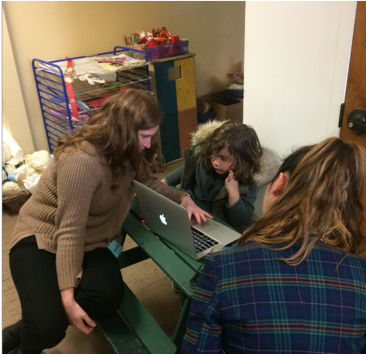 Studies show that children under the age of 6 have greater difficulty comprehending sentences that question objects (e.g. Who did Mary call ____?) than those that question subjects (e.g. Who ____ called Mary?). In this study the team investigated the acquisition of two constructions that involve subject/object gaps—“wh” questions that contain elided material, a.k.a. sluiced questions (e.g. Someone called Mary, do you know who?) as well as relative clauses (e.g. I know the man that _____ called Mary. The researchers aim to investigate two key questions. (i) will children show a correlation in performance between these two constructions?—evidence for theoretical analyses that relate the two constructions in linguistics/mental presentations, and (ii) does children’s better performance with subject-related constructions arise from the shorter distance between the moved element and where it was originated (indicated with the underscore above), or due to the connection children make between subjects and animate agents? (i.e if who-question choose the animate subject, if what question choose the inanimate object.
Neural Correlates of Children's Persistence, Engagement, Attention, and Self-Regulation
Principal Investigator:
Dr. Jennie Grammer
Graduate School of Education & Information Studies
grammer@g.ucla.edu
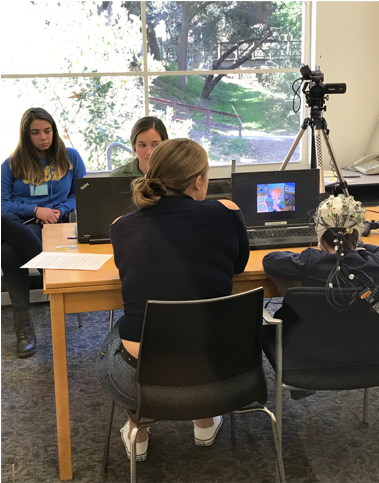
Focus: Bringing together developmental, educational, & neuroscientific perspectives, this study seeks to understand neurocognitive mechanisms that contribute to children’s self-regulation and persistence in school. Specifically, the project seeks to examine children’s attentional focus and persistence on tasks they find challenging by exploring the neural markers of response monitoring using Electroencephalography (EEG). In doing so, the hope is to explore the brain and behavioral processes that children engage in during challenging tasks and the effects on their academic skills.
Findings: Early findings show the persistence of female subjects over males across age and income demographics. Overall, these findings provide evidence that gender socialization may be influencing the development of skills related to academic success such as executive functions and persistence. Further work is needed to investigate whether these skills may be observed differentially depending on the context of the student and what underlying mechanisms support the relation between context and behavior.
Learning and reasoning with mathematical symbol
Principal Investigator:
Jeffrey Bye, Ph.D.
Department of Psychology
jkgye@ucla.edu
Participants: Rooms 4, 5 & 6 – Students ages 10-12
Keywords: Purpose Driven Progressive Formaliztion (P-PF), interactive multi-media videos for algebraic learning
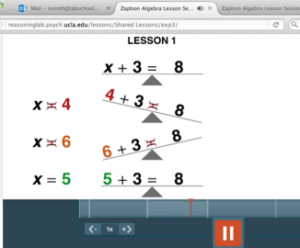 This experimental research project compares the efficacy of different methods of introducing math concepts and notation to students. Students will complete different versions of online video lessons and problems over the course of three sessions. Researchers will collect students’ scratch paper for all three sessions, and a math worksheet and survey about the materials from the final session. Additionally, students’ answers to questions in the online videos will be recorded online. All data collected on paper and online will be anonymized. The non-identifiable data from the study may be linked to anonymized student data, such as gender, race/ethnicity, and math achievement scores, if the Lab School agrees to share such anonymized data with the researchers. None of the data, analyses, or reports from the study will contain any identifiable information about your child. As parents have already signed the UCLA Lab School blanket consent form, they are not required to sign any additional forms at this time. This study was developed by a postdoctoral researcher and a professor in the UCLA Psychology Department. Parents are welcome to contact Dr. Jeffrey Bye (jkbye@ucla.edu or 949.500.6511) or Dr. Patricia Cheng (cheng@lifesci.ucla.edu) with any questions.
Science Through Technology Enhanced Play
Augmented Reality Learning Environment
Professor Noel Enyedy, Ph.D. Graduate School of Education & Information Studies
enyedy@ucla.edu
Participants: Primary classrooms
Key Words: Modeling, Science Education, Augmented Reality
This project has developed two science units–states of matter and pollination–that employ commercially available sensing equipment to support early elementary science classrooms to use play to model and simulate science concepts. The National Science Foundation, has awarded the team two follow up grants to add additional features such as the integration of iPads and more interactivity. The research findings of this study will inform the field about the ways in which young students can engage in authentic scientific modeling, and the ways that technological tools can enhance this process. Furthermore, the research findings will demonstrate how students’ play activities can be leveraged to support academic learning activities in developmentally appropriate ways.
Learning and reasoning with mathematical symbols: Connecting contextual mathematical thought to abstract, symbolic mathematical operations
Principal Investigator:
Jeffrey Bye, Ph.D.
Department of Psychology
jkgye@ucla.edu
Participants: Rooms 4, 5 & 6 – Students ages 10-12
Keywords: Purpose Driven Progressive Formaliztion (P-PF), interactive multi-media videos for algebraic learning

The concept of an algebraic variable is both important in its own right and foundational for higher levels of mathematics, but many students struggle to understand the meaning and purpose of a variable. Common math education practices often fail to support students in making meaningful insights about the interpretation of a variable, its mathematical purpose, or its relevance in solving real-world problems. Such conceptual impoverishment prevents these students from appreciating algebra and from building on its concepts in more advanced math. This project seeks to assess new educational materials, in the form of online multimedia videos, that encourage and support students’ discovery of the meaning and purpose of a variable, guided by principles from educational psychology and the cognitive psychology of learning.
The concept of an algebraic variable is both important in its own right and foundational for higher levels of mathematics, but many students struggle to understand the meaning and purpose of a variable. Common math education practices often fail to support students in making meaningful insights about the interpretation of a variable, its mathematical purpose, or its relevance in solving real-world problems. Such conceptual impoverishment prevents these students from appreciating algebra and from building on its concepts in more advanced math. This project seeks to assess new educational materials, in the form of online multimedia videos, that encourage and support students’ discovery of the meaning and purpose of a variable, guided by principles from educational psychology and the cognitive psychology of learning.
Analytics Validation for PBS KIDS Science Games
Principal Investigator: Greg Chung
Graduate School of Education & Information Studies (CRESST) chung@cresst.org
Participants: Rooms 3, 11 & 12 – Students ages 6-8
Keywords: gameplay meaures for Inquiry, Engagement, Affect, Content Knowledge
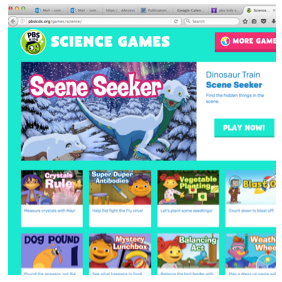
While many educational games strive to adapt for an optimal gaming and learning experience, there is relatively little research on creating algorithms for adaptivity This study seeks to understand the efficacy of algorithms embedded in educational science games that adapt the user experience according to the player’s actions and performance in order to deliver a superior learning experience. The study will also lead to the development of new algorithms based upon the observational data we collect in order to further the adaptive capabilities of the games. Participants will be observed playing science games (aligned with the Next Generation Science Standards), developed by PBS KIDS. Video data and clickstream data will be collected, and players will participate in 2 short interviews with researchers to understand their background knowledge of the science concepts, attitudes toward science, experience with digital games, and experience playing the games. Data will be analyzed qualitatively to understand the players’ experience of the game adaptivity, and new algorithms will be developed based upon observations of player behavior.
Incubation and Creativity Across Development
Principal Investigator: Gerardo Ramirez
Graduate School of Education & Information Studies (CRESST) gerardoramirez@ucla.edu
Participants: Rooms 1,2, 3, 11,12,18, – Students ages 6-10
Creative-thinking skills play a central role in allowing students to escape conventional knowledge and make innovative contributions to society. Mathematical creativity refers to the ability to think flexibly about numerical relationships, to apply novel problem solving approaches, and to bridge remote ideas between mathematical concepts—all qualities of the most advanced mathematicians. We propose that educational contexts that strictly adhere to convention and reproduction at the cost of innovation, self-generation, and divergent thinking, stifles the potential of creative students. The goal of our proposed program of work is to investigate the educational contexts that encourage mathematical creativity and to examine how we can leverage the power of underlying unconscious thinking processes to better enhance the development of creative ability in mathematics. Lab school children will be given one math problem and asked to produce as many strategies as they can for 3 minutes. Some children will be given a break. Everyone will then tackle the same problem for an additional 3 minutes. Children will also complete some simple questionnaires examining attitudes around math. We hope to recruit a sample of 1st,2nd and 4th or 5th grade children. The math task children are asked to solve will serve as a measure of flexible math thinking.
The Role of Social and Emotional Context in the Development of Decision Making Processes
Principal Investigator:
Professor Jennifer Silvers Ph.D.
Department of Psychology
Silvers@ucla.edu
Participants: Rooms5, 6 & 4 – Students ages 10-12
Keywords: Decision Making, Self-control, Emotional regulation
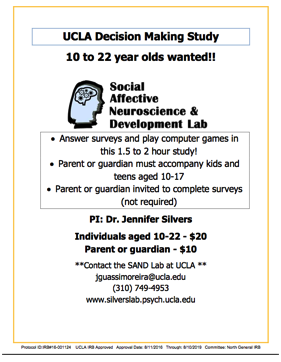
The current study seeks to understand how social and emotional information influences adolescent self-control and decision making. Specifically, we will examine how adolescents make decisions about risk and reward in different contexts. This research is the latest in a line of work by members of the Social Affective Neuroscience & Development lab that investigates how emotional and social processes influence well-being in youth (e.g., Silvers et al., 2016, Cerebral Cortex; Guassi Moreira & Telzer, 2016, Developmental Science). The specific aims of the study are (1) to understand whether practicing emotion regulation primes better impulse control during decision making in risky contexts (2) and whether adolescents refrain from risk taking when they realize that others are affected by their choices. Hopefully, the results of this current study will go on to inform future educational interventions aimed at improving students’ decision making and self-control